Open the walkthrough
Confirm the supported Linux host, storage, node role, and timing requirements in one guided place.
 ROKO Nodes
edge privacy users + validator partners
ROKO Nodes
edge privacy users + validator partners
nodes.roko.network · testnet v2 · runtime spec 286
Run a private edge node for local RPC, LAN time, and mesh observation; or use the same path to prepare for validator authority with stronger evidence.

White-glove launch path
The installer collects every choice before it changes the host, shows a complete dry-run plan, installs the clock and verified node runtime, waits for synchronization, then writes a readiness report.
Confirm the supported Linux host, storage, node role, and timing requirements in one guided place.
The installer collects the role, runtime, clock path, timeout, and report location before making any change.
One confirmed run prepares the clock, installs the verified node, creates the service, and waits for full synchronization.
Keep the readiness report. Validator candidates use it for the separate reviewed enrollment and activation process.
Live network status
Browser-side telemetry from the public ROKO RPC. Validator authority is derived from GRANDPA state; mesh peers are shown separately.
Not checked yet.
Checking public RPC…
Checking GRANDPA authority state…
Checking temporal mesh state…
https://rpc.roko.network
Faster bootstrap
Normal and archive snapshots are available through direct HTTPS, torrent files, and magnet URIs. The torrent includes an HTTPS web seed, so it can complete even when few community peers are online. Always verify the snapshot manifest and SHA-256 digest before restoring it.
# Download the profile manifest and payload together
jq -r '.archive.sha256 + "  " + .archive.file' snapshot.json > SHA256SUMS
sha256sum --check SHA256SUMS

# Stop the node before restoring chain database files.
# Never restore keystores or node identity from a public snapshot.
Why ROKO is different
Full, archive, sentry, observer, and validator nodes exchange chain and P2P data.
Chrony bootstraps test and edge hosts; partner validators use Timebeat for the production timing path.
ROKO PTP² measures peer clock quality; Temporal RPC exposes time-aware data.
The node consumes the host clock. Chrony provides a practical bootstrap for test and edge systems; Timebeat is the endorsed validator timing stack and maximum-payout eligibility path.
Public RPC and Internet peer traffic are noisy. Sentries absorb that exposure so validator authority can stay isolated.
Mainnet activation is easier to trust when a partner can show repeatable software, chain, clock, disk, peer, and monitoring checks.
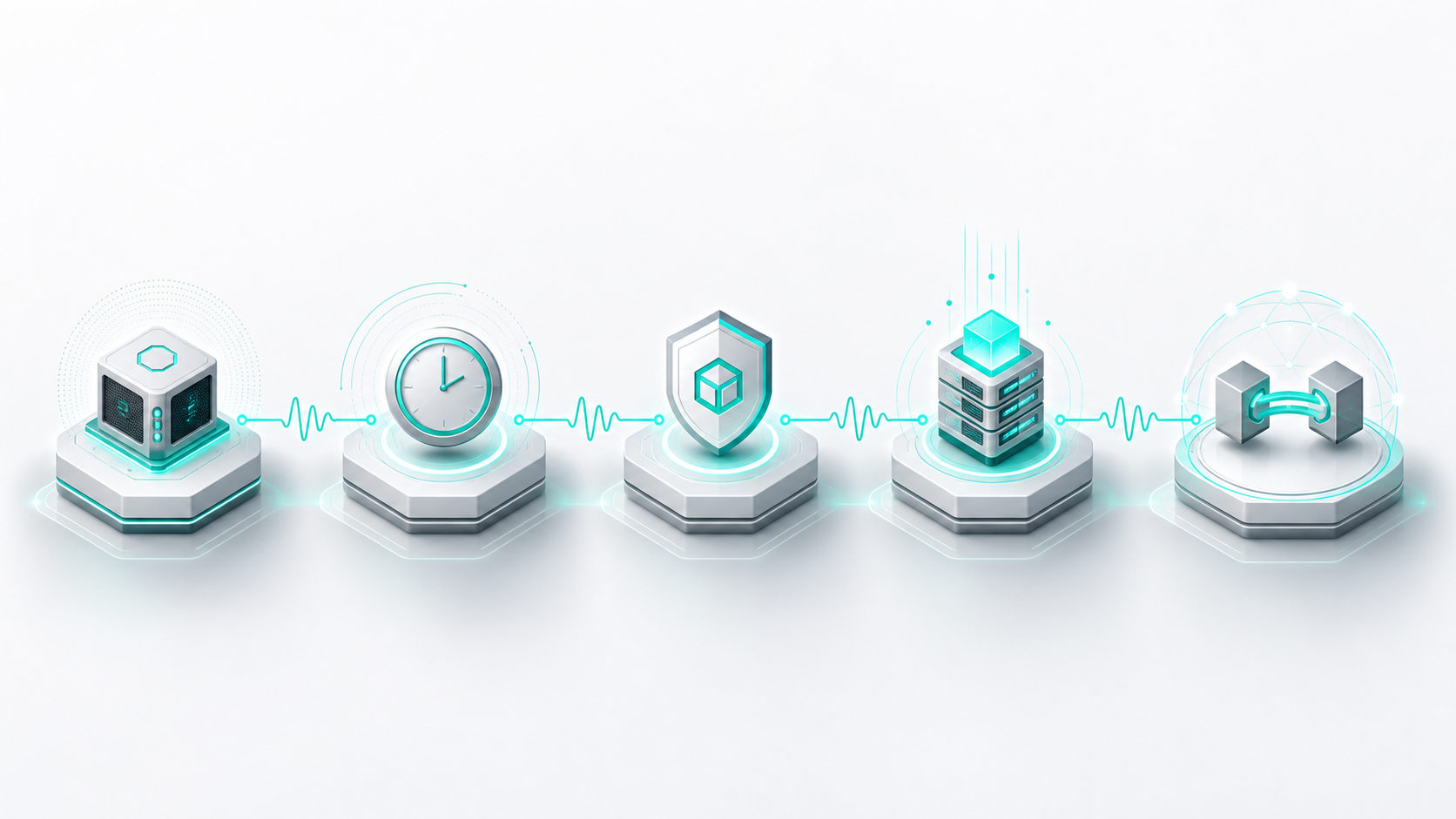
Visual model
Verification
chronyc trackingchronyc sources -vsystemctl status roko-nodejournalctl -u roko-node --since todaysystem_healthsystem_nodeRoleschain_getFinalizedHeadchain_getHeaderValidator candidate
Starting with --validator does not make a node part of
the active validator set. Enrollment, session keys, bonding,
election, active membership, and finalized authorship are separate
states. No incumbent validator or operator approves candidacy.
Production direction
8 modern physical cores minimum; 12-16 preferred.
32 GiB minimum; 64 GiB+ preferred.
Dedicated enterprise SSD/NVMe; 2 TB minimum, more for archive duties.
Stable uplink with reviewed P2P reachability and firewall policy.
Timebeat partner profile for maximum-tier validators; monitored bootstrap sources for test and edge hosts.
Full-disk encryption, TPM/secure boot where available, least privilege, recovery path.
Operator access + support
Submit the operator intake, or join the official ROKO Telegram or Discord and speak with the team. We distribute nightly node binaries through the downloads portal and container images through GHCR; public node onboarding does not require source-repository access.